Strip, Seal & Scrub Floors in Melbourne
Restore, protect, and maintain your commercial hard floors.
9001
14001
45001
Aust Facility Services delivers professional strip, seal, scrub, burnish, and polish services for all commercial hard floor types across Melbourne. Our trained floor care technicians use industrial-grade equipment and follow documented Safe Work Instructions for every floor type - vinyl, linoleum, terrazzo, polished concrete, stone, and timber.
What Is the Strip and Seal Process?
Over time, commercial floor sealers accumulate layers of wax, scuff marks, embedded dirt, and surface damage that regular mopping cannot address. Stripping removes all existing sealer down to the bare floor surface, allowing a fresh protective coat to bond properly. A full strip and seal typically involves:
- Pre-clean - remove all furniture, mats, and loose debris
- Stripping chemical application - heavy-duty alkaline stripper applied, dwell time 5–10 minutes
- Machine scrubbing - rotary floor machine removes dissolved sealer and contamination
- Wet vacuum and rinse - all slurry removed and floor neutralised
- Sealer application - 3–5 coats of commercial acrylic or polyurethane sealer, each fully dried before the next coat
- Final burnish - high-speed burnisher (1,500–3,000 RPM) raises the gloss finish
How Often Do Commercial Floors Need Strip and Seal?
The frequency depends on foot traffic volume, floor type, and the maintenance cleaning regime in between. As a general guide:
- ✓High-traffic retail, supermarkets, hospitals: every 6–9 months
- ✓Schools and education facilities: every school holiday period (1–2× per year)
- ✓Standard office and commercial: every 12–18 months
- ✓Low-traffic storage, back-of-house: every 2–3 years
Between full strip and seals, scrub-and-recoat (applying fresh sealer over an existing, lightly scrubbed floor) extends the life of the seal without the full cost of a complete strip. We assess your floors at each visit and recommend the appropriate treatment.
What Equipment and Sealer Types Do We Use?
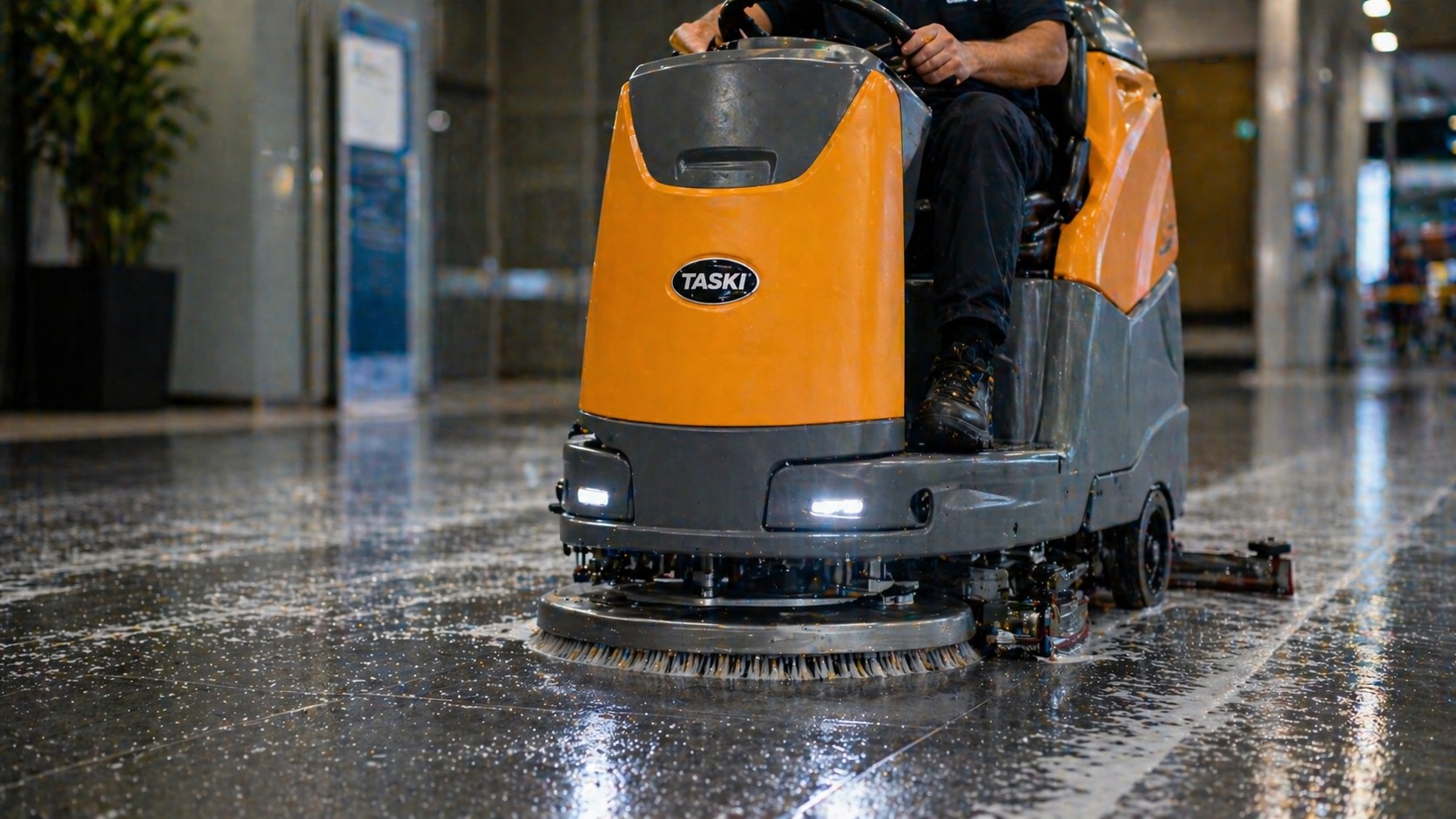
We use professional rotary scrubbing machines (175–300 RPM for scrubbing) and high-speed burnishers (1,500–3,000 RPM) for the post-seal shine. Auto-scrubbers are used for large-area maintenance cleaning between seal cycles.
Sealer type is matched to the floor and environment:
- ✓Acrylic/polymer sealers - standard commercial vinyl and linoleum; strippable for regular maintenance cycles
- ✓Polyurethane coatings - hardwood, bamboo, and timber sports floors; harder-wearing but requires professional application
- ✓Penetrating sealers - porous stone, slate, and terracotta; soaks into the surface rather than forming a film
- ✓Wet-look and matte finishes - available depending on client preference and floor type compatibility
Scheduling Floor Care Works
Strip and seal work is almost always conducted out of hours - evenings, overnight, or over weekends - because the floor must be completely clear of foot traffic during the sealer drying/curing period (typically 30–45 minutes per coat, with 3–5 coats applied). For a large retail floor or hospital ward, this typically means a scheduled weekend close-down or overnight crew. We coordinate access with your facilities manager and provide estimated completion times so you can plan re-opening confidently.
Frequently Asked Questions
Last updated: April 2026
Ready to Discuss Your Cleaning Needs?
Contact us for a free, no-obligation site inspection and tailored quote.
Get a Free Quote Call 03 8712 8359